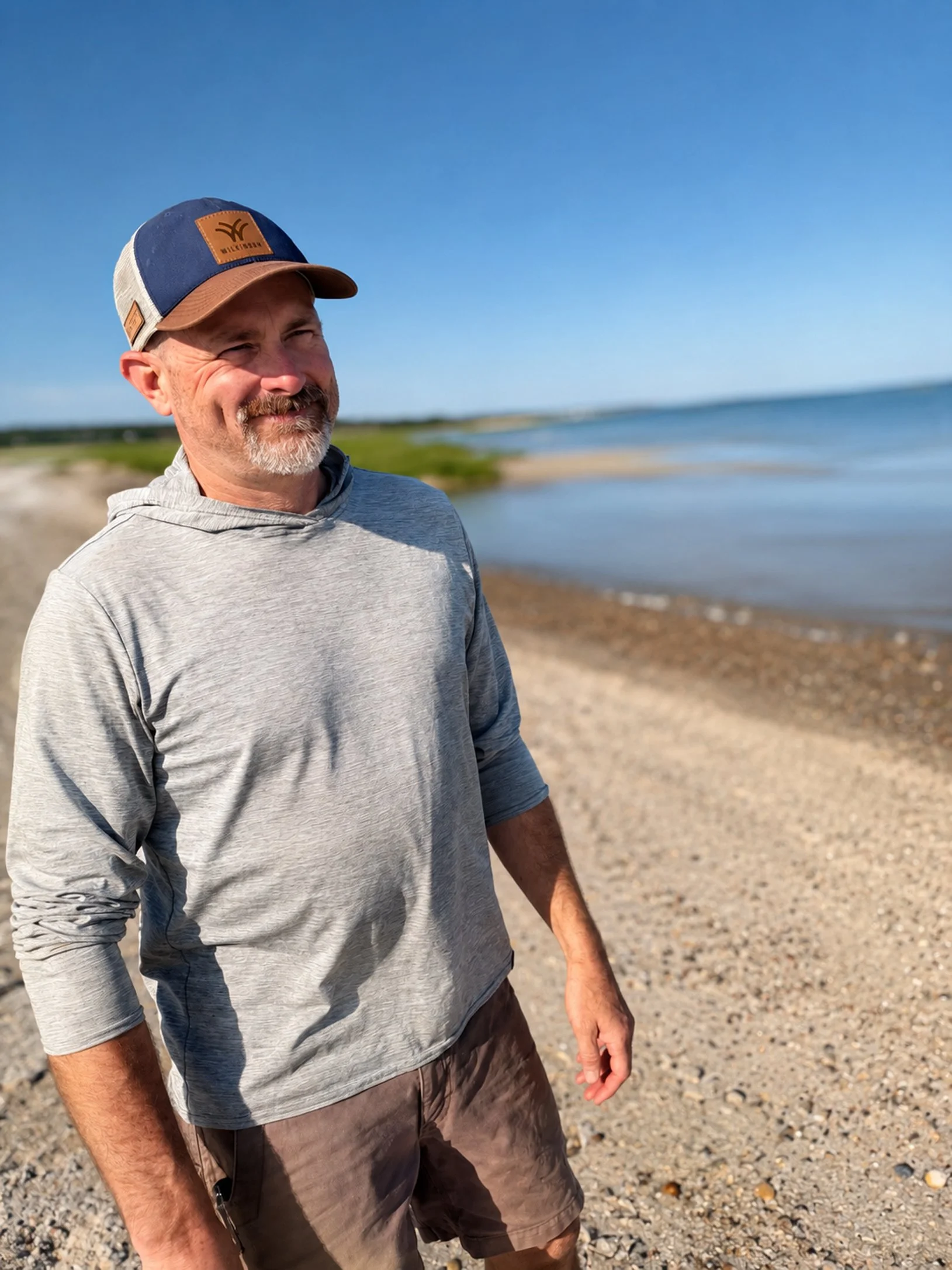
A new chapter in my work as a restoration ecologist.
For almost 30 years, I’ve had the privilege of helping clients solve complex shoreline problems up and down the New England Coast. Along the way I’ve worked with remarkable engineers, contractors, scientists, and property owners, and I’ve earned the respect of regulators along the way.
Many of you know me from that work.
For the past several years I’ve been part of a larger organization. This summer, I’m returning to independent practice by launching Wilkinson.
It’s good to be back.

Why Wilkinson?
After almost three decades in the field, I found myself wanting the freedom to keep asking questions.
The coastline is changing. Storms are changing. Regulations are changing. Our understanding of how natural systems perform continues to evolve.
Engineering should evolve with them.
Wilkinson gives me the opportunity to continue developing, testing, and applying practical shoreline solutions that help protect coastal property while working with the realities of today’s coast.
How I Work
I’ve never believed there is one right answer—or one right team—for every shoreline.
Every site has its own history, conditions, constraints, and opportunities. My job is to understand those conditions and bring together the right expertise to address them.
I work collaboratively with a select group of experienced engineering firms and other specialists, assembling the team each project requires. That allows us to combine sound engineering judgment with ecological design and develop solutions that will perform over the long term.
Sometimes that means taking a creative approach to conventional design. Sometimes it means nature-based systems. Often it means combining the strengths of both.
What matters is finding the solution that best fits the site and the people who depend on it.
Introducing WilkinSod
WilkinSod (patent pending) gives engineers a new tool for stabilizing dynamic coastal environments. By providing an established, reinforced plant community on day one, ideal conditions expedite superior performance.
Rather than an end point, this is one more tool available to engineers working in dynamic coastal environments.
Like everything I do, it grew out of watching what succeeds, what fails, and what the shoreline itself has to teach us.
Let’s Reconnect
Whether we’ve worked together before or are meeting for the first time, I’d enjoy hearing what you’re working on.
If you’re facing a shoreline challenge—or simply curious about what I’m building—I hope you’ll reach out.
I’d love to continue the conversation.